Sean Elliott Named COH Alumnus of the Year

Feb. 24, 2025
Image
Sean Elliott

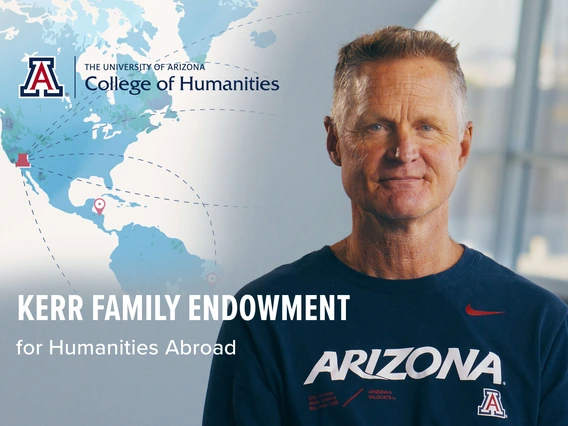
Beyond his natural talent, the root of Sean Elliott’s successes on the basketball court came from the unwavering support of two people: his mother Odiemae Elliott and Coach Lute Olson.

Before chasing his basketball dreams into the NBA, Sean made promises to each of them that he would one day return to school and complete his degree, which he did in 2022, earning a Bachelor of Interdisciplinary Studies, 35 years after he turned pro.

“My mother, number one, always talked about education and wanted me to finish. That was something that I had to accomplish for her. And number two, for Coach Olson. A lot of people didn’t realize how much he harped on education and how important it was for him to see his kids graduate. Coach O was serious about education and I wanted to finish for his legacy,” he said. I can remember hitting send on the final paper and I just looked at my wife Claudia, and I said, I’m done, I’m done. And, it was a great feeling, just incredibly fulfilling, because it took me a long time, but I did the work and I just wanted to cross that finish line.”


Because of the flexibility of Arizona Online, Elliott was able to finish his degree from his home in San Antonio, often sitting at his dining table.

“A degree in interdisciplinary studies makes you well-rounded, because the scope of your classes is so broad that you can learn something from anywhere, every kind of field,” Elliott said. “I know a lot of people in business that say, ‘If they’re well-rounded, if they’re flexible, if they’re adaptable, then that's the type of person I want.’ And that’s what humanities brings to the table.”

Like many others, Elliott’s return to school was years in the making, years of career and family, years of contemplating, and sometimes making excuses or internally chastising himself. But when the pandemic struck, he was at home, with plenty of time and no excuses. 

“It was the perfect opportunity for me to really get back into it and immerse myself into school. And it worked out perfectly,” he said. “I didn’t think it was going to be as flexible. I thought that at some point I was going to have to go back to campus, but once I signed up and I had the academic counselors helping me, I realized there was a whole new world open to me. There were so many classes and opportunities there.”

Elliott had a mix of requirements and electives remaining and to fulfill his Interdisciplinary Studies major, and he took full advantage of a wide range of courses: oceanography, Slavic folklore, film, Italian Renaissance, sociology of sports and more.

“I’m curious and I want to know what’s out there. And for me, that really was fulfilling. I’ve always been a nerd and I got to take classes that were fun and interesting on subjects that I never even imagined that I would be into. I took away something from every single class that I had,” he said.

These days, Elliott works in broadcasting as the lead analyst for the San Antonio Spurs, while maintaining a busy schedule of philanthropic and community involvement. After earning a host of accolades during his playing career, including having his jersey #32 retired by both the Arizona Wildcats and San Antonio Spurs, Elliott’s degree brings him full circle. And earned him a new accolade: the College of Humanities 2024-2025 Alumnus of the Year.

“When I finished, I felt like college wasted is on young people. I look back at my time when I was 17 years old at Arizona, and I didn’t know anything. But I am grateful that I got this opportunity, just to go back and learn more,” he said. “I chose humanities because it deals with people and how you can help better the people around you and make the world a better place. I chose humanities, but humanities also chose me.”


Longtime Bond Between Africana Studies & Community Provides Mutual Benefits

Feb. 5, 2025
Image
Africana Studies Department Head Praise Zenenga celebrates with a new graduate at convocation.

Twenty years after the introduction of the Africana Studies degree at the University of Arizona, the program maintains the same strong ties to Tucson’s tight-knit Black community that brought it to life in the first place.

A direct product of the social movements of the 1950s and 1960s, the Africana Studies program at the U of A was formally established in 1976, with an Introduction to Black Studies course introduced the following spring. The bachelor of arts degree was created in 2005 and in 2022, the program officially became the Department of Africana Studies, with 13 tenured, tenure-track and career-track faculty.

Like elsewhere across the country, Black students and community organizations in Tucson demanded a curriculum that directly addressed their particular history, identities, cultures and social problems. And for current Department Head Praise Zenenga, that origin will always be respected by the faculty and students, who actively work to maintain strong ties with the community members who fought for the program and have supported it for decades.

“For me, it’s a huge responsibility. We have to keep the legacy going. First of all, it’s about excellence, in terms of our faculty research and our teaching,” Zenenga said. “Part of our job is to make sure the field keeps growing and the field keeps serving the communities it was created to serve, and part of our job is moving with the times.”

Africana Studies is by its very nature an interdisciplinary course of study, Zenenga said.

“What is it that has shaped the Black experience? Number one is history, the forced movement of large numbers of people, for Blacks in the United States, Blacks in Brazil, the Caribbean, the UK, Europe, and how they moved from the African continent to be where they are presently,” he said. “Then we talk of politics, of laws, of religion and how it was used for purposes of enslaving Africans and colonizing Africa. We are talking of anthropology, of practices and cultures, everything from the arts to the structure of societies. Those disciplines are inherently built into Africana Studies. They’re all blended and we’re studying them all together as one.”

None of that existed at the U of A when Richard Davis enrolled in 1965. Davis was a founder and the first president of both the Black Student Union and the Zeta Theta Chapter of the Alpha Phi Alpha Fraternity. He graduated with a bachelor’s degree in 1969 and a law degree in 1972.

“When I got my law degree, there was no such thing as Africana Studies. We talked about it, but never dreamed it would get to the point it’s now arrived. When I was thinking about Africana Studies, I was primarily thinking about African American history and it being included in history books because it was excluded,” said Davis, now recognized as one of the top trial lawyers in the country. “That was my vision and I’ve been very pleased to see that it’s gone way beyond that.”

Davis has long supported the program and become somewhat of a spokesperson, asked from time to time to come in and talk about the pre-Africana Studies history at U of A and all the benefits the program has provided in the years since it began.

“I’ve watched it evolve and it’s well beyond the scope I envisioned back then. When I talk to the professors, I hear what they’re doing and I’m so impressed,” Davis said. “That’s what education is all about, to expose students to many different things and they’ve done a tremendous job. I’m just amazed by the things they do.”

Daisy Jenkins, who held executive positions at both Raytheon and the Carondelet Health Network, said she supports the university as a whole, but focuses significantly on Africana Studies, hosting fundraisers at her home.

“The department has made a continuous effort to be connected with the Black community, to learn about the Black community, to connect with leaders in the Black community and to ensure there was an awareness, not only of the need for the department, but the value proposition of having Africana Studies,” Jenkins said. “This is especially true for a community like Tucson, where the African American population is about 4 percent and there hasn’t always been the perspective among Black citizens that the university had any real connection with the Black community, other than athletics.”

Styne Hill, Chair of the university’s Black Community Council, said Zenenga, his predecessor Alain-Philippe Durand and faculty members have all reached out to the community and welcomed the support and the understanding they’ve received in return.

“The community absolutely loves working with them because they ask ‘How can we help?’” she said.

For her part, Hill, who retired as Chief Information Officer for Raytheon Missile Systems, enjoys working with students on whatever their future goals may be.

“We use mentor as a catch-all word. Students might not know how they need help. But if you approach them as interested in their growth and development and would love to know where they’d like to focus their energy and efforts, they can think about it better,” she said. “I’ve seen a lot of students that we’ve talked to from Africana Studies who really appreciated those conversations. It wasn’t the way they thought about needing support.”

For Durand, who directed Africana Studies from 2010 to 2016 and now serves as Dorrance Dean of the College of Humanities, cultivating close ties with the community ultimately benefits the students, who can be exposed to a myriad of career paths and ways they can apply the versatile skills they gain in the program. 

“Africana Studies has unique advantages for students, who gain such a wide breadth of knowledge that they can find meaningful employment anywhere,” he said. “We have very trusted partners in the community who’ve ensured that Africana Studies has the support it needs to thrive.” 

Lehman Benson, now U of A Vice President of Black Advancement and Engagement, served as interim director of Africana Studies from 2008 to 2010, brought in from the Eller College of Management to stabilize and reorganize the program.

“It was fun for me working with the community and we had great support from the Black Community Council,” he said.

As vice president, Benson’s initiatives for students, faculty and staff include financial literacy, healthcare and career-advancement skills, all of which he sees strongly reflected in Africana Studies.

“It really is an interdisciplinary program. They’ve done a great job with the curriculum and cross-listing courses,” he said. “The major is for everybody.”

Africana Studies faculty members themselves are integral parts of the local Black community, said Professor of Practice Tani Sanchez, who was also the first president of the Tucson chapter of the Afro-American Historical and Genealogical Society.

The Department of Africana Studies is unusually active in holding events with broader public appeal, especially during Black History Month. In recent years, faculty have organized talks from hip-hop legend Grandmaster Flash, acclaimed journalist Jelani Cobb, historian and activist Pamela Mays McDonald, and scholar and author Regina Bradley, among many others.

“It’s been so valuable for Africana Studies to bring that intellectual component in,” she said. “Students have been energized and happy they came and community members enjoy it as well. The speakers we’ve brought in are the ones who really connected everything.”

Adamsbaum Family Establishes First Endowed Scholarship in Africana Studies

Feb. 5, 2025
Image
Paul and Dale Adamsbaum and scholarship recipient Samia Hartley.

When Paul Adamsbaum was in college in the late 60s and early 70s in New York, he had a job delivering LPs and 45s to record stores throughout the city. Visiting as many as a dozen stores a day, he got to know the neighborhoods, their music and the people who frequented the stores. There was Latin and Caribbean music in the Bronx, blues, gospel and soul in Harlem, jazz and salsa in Lower Manhattan and Motown in Brooklyn. Befriending the music shop owners, he learned about the opportunities they had and the challenges they faced in their communities.

In the 1990s, Adamsbaum fell in love with Tucson during a golf vacation and when it came time to retire, he and his wife Dale moved here full time, soon becoming regulars at the Fox Theatre and Centennial Hall and season ticket holders for men’s and women’s basketball and softball.

But the Adamsbaums were interested in engaging with the community and the university on a more meaningful level and decided to establish a scholarship. While they were researching what could have the most impact, Adamsbaum also thought back to his formative days in New York, and his first-hand knowledge of the historical challenges facing the city’s Black communities. 

“Because of the experiences I had growing in a community with mixed cultures, I always understood that not everybody has the same opportunities,” he said.

In 2024, Paul and Dale founded the Adamsbaum Family Endowed Award in Africana Studies, the first ever scholarship endowment in the Department of Africana Studies. In May, the couple got to meet the first scholarship recipient at the College of Humanities annual Honors Luncheon.

Samia Hartley, now a sophomore, is a double major in Africana Studies and medicine, with a career goal of becoming an emergency and trauma surgeon. She started at the University of Arizona knowing she wanted to major in medicine, but also started going to African American Student Affairs events and enrolled in an introductory Africana Studies course, which soon prompted her to add the major.

“Hearing more about the major and getting more involved in that made it very interesting to me. It was hard for me growing up and not knowing much about my ancestry because of the slave trade. I wanted to learn more about my history. It’s a self-journey,” she said.

Hartley sees her Africana Studies major as something that will make a positive impact on her career as a physician.

“The combination of medicine and Africana Studies is great for me because there are a lot of disparities for black women in the medical world,” she said. “By understanding how those disparities developed, I can be able to confront them.”

Hartley’s combination of science and humanities fits right in line with the Adamsbaums' goals in establishing the scholarship.

“We want to empower scholars to use their education,” Adamsbaum said. “Hopefully they can take something away from their studies they can use to go out into the world and influence people.”

SILLC’s Whitehead Receives Graduate Program Coordinator Award

Feb. 5, 2025
Image
Frank Whitehead

Frank Whitehead, Graduate Services Coordinator for the School of International Languages, Literatures and Cultures, is the recipient of the Graduate Program Coordinator Outstanding Contributions Award.

The Graduate College created the award in 2024 to recognize and honor exceptional dedication and outstanding contributions by graduate program coordinators. The Graduate College selects one recipient per year during the spring semester and these individuals receive a $1,500 award.

“Graduate Program Coordinators are the backbone of our graduate programs and the efforts from these individuals are directly linked to graduate student success,” said Kirsten Limesand, Vice Provost for Graduate Education and Dean of the Graduate College.

Whitehead has served as the sole graduate program coordinator for SILLC since 2014, supporting five separate academic departments that offer a wide range of internationally focused graduate programs and employ more than 100 graduate students as teaching assistants. While working full time in his role, he also earned Ph.D. in History from the University of Arizona in 2021.

One nomination letter, from SILLC Director Karen Seat; Department Heads Carine Bourget, Barbara Kosta and Wenhao Diao; and College of Humanities deans, noted that Whitehead’s office is adorned with souvenirs from China, Japan, Ghana, Iran and other countries, presented as gifts from graduate students for his help throughout the application, hiring and degree completion processes.

“Dr. Whitehead is a crucial pillar of the educational mission and operations of SILLC. We rely heavily on his detailed knowledge of the Graduate College’s procedures and policies and his ability to navigate the challenges of international programming with utmost care and professionalism,” they wrote. “He has performed impeccably, far beyond any expectations, even as he has shouldered an incredibly heavy and complex workload. He has never failed to be reliable, accountable, effective and collaborative.”

Additional nomination letters highlight Whitehead’s efforts going above and beyond in solving particularly difficult issues with visas and travel for specific international students. Another letter, from directors of graduate studies in Classics, German Studies and East Asian Studies, noted Whitehead’s knack for offering solutions to difficult issues in a College with graduate students and faculty from nearly every continent and a wide range of cultural expectations.

“Frank has helped us weather times of great change and uncertainty in graduate education, such as the Covid-19 pandemic and its impact on all, but especially also international students far from home and those from diverse backgrounds, who were disproportionately affected in various ways,” they wrote. “In all aspects of his work, Frank has built a culture of trust and stability around graduate education coordination in the College that is shared by staff, faculty and graduate students alike.”

NCI Offers Review of Bilingual Employee Qualifications

Feb. 5, 2025
Image

A new National Center for Interpretation program is being offered to assist University of Arizona departments and other units that might have a need for translation, interpretation or bilingual assistance.

NCI, founded at the U of A in 1979, offers a variety of services, including translator and interpreter training and testing in both the legal and medical fields, translation and interpretation services, and self-study materials to ensure interpreters reach a level of excellence required by the field.

The new Review of Bilingual Employee Qualifications program came about because of issues on campus with current bilingual employees being tasked with translation and interpretation, said NCI Director Sonia Colina.

“This serves the university because the university has resources in bilingual employees that it can use more efficiently. They’re mostly untapped and the work that is done is mostly ad hoc,” Colina said. “This is a way it can be done more systematically and ensure the quality.”

NCI can provide units with expert advice about whether an individual has the qualifications to provide translation or interpretation services in the context of their job, possibly saving the unit money.

NCI can also advise units on employee’s necessary preparation for providing language services for a unit and review the translations done by a staff member that NCI has determined to be qualified.

“They do know they have a bilingual employee, but just asking a bilingual employee to be a translator normally that doesn’t work,” Colina said. “This can help save money if a department can identify anyone internally who can take care of language needs, especially if they do it right and are vetted. This can make sure units know how to do things properly, and it helps with the professional development of the employees.”

Coach Lloyd Offers Lessons in Leadership and Embracing the World

Feb. 4, 2025
Image
Tommy Lloyd discusses leadership with College of Humanities heads and directors.

Early on in his career as an assistant basketball coach, Tommy Lloyd started making a name for himself as one of the first to start recruiting international players.

It was a move that led to enormous success on the court, but one that Lloyd could only make because he himself had developed a mindset that was eager to explore the world and embrace different cultures.

Those are the same values Lloyd, now Head Coach at the University of Arizona, shares with the College of Humanities, where he spoke about leadership during a December retreat for the college’s heads and directors.

Alain-Philippe Durand, Dorrance Dean of the College of Humanities, said he and Lloyd started conversing because basketball players, among many other athletes, regularly study in the college.

“We share a lot of the same values, things like intercultural competence, resilience, motivation, creativity and thinking outside the box,” Durand said.

After getting to know one another – and discussing world travels – Lloyd approached Durand about hosting a happy hour for College of Humanities heads and directors, deans and advisors. Durand in turn invited Lloyd to discuss leadership at the retreat and the coach, even in the midst of basketball season, immediately accepted.

“Travel is amazing – it’s changed my life and opened up my eyes to the world,” said Lloyd, who’s visited every continent but Antarctica on more than 50 international trips. “The most important thing you’re ever going to do in your life is travel.”

Now in his fourth season at U of A, Lloyd has recruited players from Canada, France, Sweden, Serbia, Lithuania, Estonia, Cameroon and Mali (unique enough for a story in The New York Times), alongside U.S. student-athletes who’ve never been outside the country.

“I’ve coached so many international players, these relationships are so normal to me now. I love the diversity of cultures and mindsets,” he said. “Bringing people in from different cultures, they can develop authentic relationships and that’s something they carry with them the rest of their lives.”

Lloyd has also guided players through international competitions, taking the Wildcats on a summer 2023 trip to Israel and the United Arab Emirates, during which the student-athletes earned study abroad credit through the Department of Public and Applied Humanities. Last summer, Lloyd coached the USA Men’s U18 team, which captured the gold medal in Buenos Aires in 2024, and in 2025, Lloyd will coach the USA Men’s U19 National Team in competition in Switzerland. Before joining the U of A, Lloyd was an assistant coach at Gonzaga for 22 seasons, where he started specializing in international recruiting.

Raised in a small town near Mount St. Helens, Lloyd said that his brother decided, out of nowhere, that he wanted to be an exchange student, and spent his junior year of high school in Sweden. Thereafter, Lloyd’s family hosted exchange students annually, welcoming students from Japan, Sweden, Denmark, Russia and Germany.

Lloyd didn’t take an exchange year himself because of basketball, but he did get the travel bug. After graduating from Whitman College, with a degree in biology, he played professionally in Australia and Germany. And after getting married, Lloyd and his wife took a trip around the world.

“It was an amazing year and ever since then, we travel, travel, travel,” he said. “I’ve seen more places overseas than I have in the U.S.”

Dean Durand said the College of Humanities and Coach Lloyd have plenty in common beyond the global mindset. Faculty and graduate teaching assistants in the College need to be able to identify talent to be effective recruiters, encouraging students to select Humanities majors and then mentoring them through the academic programs.

Image
Coach Tommy Lloyd with College of Humanities heads and directors.

In discussing leadership, Lloyd told COH heads and directors that simple, authentic actions are the best way to set the stage for good things to happen.

“Leadership doesn’t need to be any crazy, over-the-top, agenda-driven deal. Just be the example,” Lloyd said. “I can’t have a steady team if I’m not steady. I can’t have a joyful team if I’m not joyful. It’s those simple equations.”  

Lloyd said his leadership mindset involves creating trust and a sense of belonging, allowing others to contribute to the vision, controlling your ego and being comfortable making mistakes. Leaders build strong relationships by being steady day to day and showing others who they are in their most genuine and vulnerable moments.  

“One of my main motivations is to deliver for the community. I’ve seen it and felt it since I’ve been in Tucson,” Lloyd said. “People have to feel you’re genuinely concerned more about their success than your own. Put your effort and energy into making people feel like they belong, every day.”

Prof. Stephan Receives National Teaching Award

Jan. 30, 2025
Image
Robert Stephan by the Sea

Robert Stephan, Associate Professor of Practice in the Department of Religious Studies and Classics, has received the Archaeological Institute of America’s 2025 Excellence in Undergraduate Teaching Award.

The award, presented at the AIA’s 126th Annual Meeting in January, is the latest in a string of teaching awards for Stephan, following: the 2024 Leicester and Kathryn Sherrill Creative Teaching Award, the 2021 University of Arizona Five Star Faculty Award, the 2021 Gerald J. Swanson Prize for Teaching Excellence, the 2020 College of Humanities Distinguished Teaching Award, and the 2019 College of Humanities Distinguished Advising/Mentoring Award.

Stephan, who excels at creating an engaging and active learning environment in large classes, is teaching nearly 1,500 undergraduate students this semester. Currently, his favorite class to teach is CLAS 150C1: Pyramids and Mummies, an introduction to ancient Egyptian history and archaeology, he told the AIA.

Stephan is exploring new ways to make archaeology exciting and relevant for a new generation (and a new demographic) of students, especially those who may never get to see these sites in person. Using video games and interactive, virtual reality videos, he’s bringing the ancient world to students, on campus and in their own homes.

“While most of my students won’t major in Classics, History, or Archaeology, the more people who have an appreciation for archaeology and the diversity of world cultures, the better off we are as a society. Teaching archaeology in these accessible, interactive ways is my way of building that appreciation,” he told the AIA.

Stephan recalled his own introduction to archaeology, when he went from a disengaged students in the back of the classroom to near the front of the room, hanging on the professor’s every word. That professor, Sue Alcock, just happens to be the 1999 recipient of this very same Excellence in Undergraduate Teaching Award.

“At the time, I never imagined that I would be one of those ‘future archaeologists.’ But as I’ve come to understand, teaching archaeology is like running a dig—helping students excavate curiosity and knowledge, layer by layer, until they uncover the rich story beneath the surface. Now, I hope to convey that thrill of discover to my own students, so that they leave each class having unearthed something profound—not only about archaeology but also about their own passion for learning about the world,” Stephan said.

Prof. Eddy White Joins AZ Humanities Board

Jan. 30, 2025
Image
Eddy White, Department of Public and Applied Humanities

Eddy White, Professor of Practice in the Department of Public and Applied Humanities, is one of three new members on the Arizona Humanities Board of Directors.

White follows Dorrance Dean Alain-Philippe Durand and Albrecht Classen, University Distinguished Professor in the Department of German Studies, as College of Humanities faculty to serve on the AZ Humanities board in recent years.

White has been a teacher for more than 30 years, including at universities in Canada and Japan. Since joining the Department of Public & Applied Humanities, he has been engaged in his primary passion for teaching and learning. This has included creating and teaching new courses, such as:

  • Car Nation: The Automobile and the American Experience
  • Friendship: Life’s Fundamental Bond
  • Working: The Rewards and Costs of Employment
  • Weird Stuff: How to Think About the Supernatural, the Paranormal, and the Mysterious
  • Motorcycle Culture: Free Spirits, Easy Riders, and the Human Experience

“I moved to Arizona in 2011 from Canada and have happily made my home here,” White said. “I have been thinking about ways of giving back to the people and state that have given so much to me and serving on the AZ Humanities Board is the perfect opportunity to do that. This new role also fits very well with my position in the Public and Applied Humanities Department, which, like AZ Humanities, is also focused on understanding and describing the human experience.”

White joins the board alongside Susan Ricci, Executive Director of the Mesa Historical Museum, and Paul Taliercio, Curator at the George Washington Carver Museum and Cultural Center.

“We are more than thrilled to have these talented individuals join our leadership team. Our board members all share a commitment to enhancing the cultural life of Arizona, and their skills and passion for the humanities are exactly what we need!” said AZ Humanities Executive Director Brenda Thomson.

COH Outstanding Senior Winter 2024: Yalitza Ramírez

Dec. 20, 2024
Image
Yalitza Ramírez

For Yalitza Ramírez, choosing to pursue her degree while staying in Nogales gave her a new vision for how she could make a difference in the community she’s always loved.

“Nogales, with its unique border culture and close-knit community, has always inspired my passion for helping others,” she said. “My journey within the humanities has prepared me to become an individual who is ready to go out and give back to the community that has nurtured me so much. The humanities opened my eyes to the complexity of social change and the diverse ways in which people can make a difference.”

Ramírez, who transferred as a junior from Pima Community College, says taking a non-traditional path to completing her degree has made all the difference. Graduating with a major in Interdisciplinary Studies, with Social Behavior and Human Understanding as her emphasis, Ramírezwas named the College of Humanities Outstanding Senior for Winter 2024.

“The humanities have taught us how to be at ease with uncertainty,” she told fellow graduates during the convocation speech. “We go out into the world today with the skills to take on the complex world we have inherited, and ready and capable of making a difference. We live in a time when understanding each other has never been more important, and we stand as living proof that what we have learned is more than the sum of all its parts.”

Ramírez expertly navigated the challenges facing both transfer students and distance students, using her natural leadership abilities both in the classroom and in her job assisting and mentoring fellow students in Nogales, Douglas and Chandler, said Victoria Meyer, Associate Director of the Interdisciplinary Studies Program, who nominated Ramírez for the award.

“I have not encountered another student in my decade at the U of A who has taken so much initiative and impacted her fellow students in such a short time,” Meyer said. “Yalitza embodies how the humanities can help students harness their potential, envision a meaningful career and apply their knowledge to benefit others in the real world.”

Meyer taught Ramírez in at least one class each semester, starting spring 2023, and said she always goes the extra mile, for classes, work or a growing number of extra-curricular activities.

“Yalitza never shies away from a challenge or waivers in her intellectual curiosity as she takes diverse courses through IDS. She often stays after class to ask questions and will excitedly share what she was learning in another class,” she said. “She quickly adapts to new types of information and modes of presentation and has a natural ability to think critically in the classroom and apply that knowledge to real-world situations.”

Ramírez said her ability to access education and stay close to home as a transfer student came with a responsibility to seek out those in need and use her education to offer help.

“My education through the Interdisciplinary Studies program has further equipped me with the tools necessary to understand and address these needs and perspectives on a broader scale. The IDS program has taught me that in order to address a problem, one must look at things from several perspectives, this is why cross-cultural communication is so important, especially in the borderlands,” she said.

Outside the classroom, her time working as a student assistant not only provided valuable experience applying her education to the real world, in real time, but helped inspire her next steps.

“My core values of collaboration, inquiry, adaptability, and compassion are embodied not just in the humanities but captured uniquely in my interdisciplinary studies degree,” she said. “I firmly believe that my humanities education will be integral to improving lives and opening doors within the community. However, education alone is not enough. By pursuing a career in law, I aim to bridge this gap, ensuring that legal and social support systems work together to uplift individuals and families.”

Inside an NEA Translation Fellowship 

Dec. 19, 2024
Image
Kelsi and Garcia

By Kelsi Vanada
Program Director, American Literary Translators Association

A poem in translation is a rewriting of the original—at once the same poem and a new poem. “It’s a sibling. It’s not a twin,” as described by Danish translator Katrine Øgaard Jensen, winner of the American Literary Translators Association (ALTA) 2018 National Translation Award in Poetry.

ALTA translators like Øgaard Jensen are working to help world literature find its way to Anglophone readers who could never experience it otherwise. Tucson has been ALTA’s home since 2019, when we affiliated with the U of A College of Humanities. 

The “sibling” nature of translation helps me think about it as an inherently collaborative and multi-disciplinary act—both values that ALTA shares with the College of Humanities. The U of A now has 25 ALTA Faculty Affiliates, faculty and staff who are committed to teaching translation in their classrooms, giving students the opportunity to expand their sense of what this art form makes possible. 

In addition to serving as ALTA’s Program Director, I am a translator myself, primarily of Spanish-language poetry. I discovered literary translation when I was in graduate school. I took my first translation workshop and was “hooked.” I had never considered that my love of the Spanish language and of Spanish-language literature could be combined with my love of writing poems. Translating poetry allows me to work in collaboration with another writer and their words—it’s creative writing, with different constraints. 

My current translation project was awarded a 2024 Translation Fellowship from the National Endowment for the Arts. I’m translating Spanish poet Berta García Faet’s 2021 poetry collection Una pequeña personalidad linda [A Little Pretty Personality]. It’s her seventh book, the work of a poet in the prime of her writing life. The book’s central motif is a reinvention of the image of the medieval trobairitz: a wandering narrator singing as she goes through the world in search of something not yet named, a pilgrimage through a riddle of a universe that seeks to impose its conventions on a voice longing to be free.

García Faet and I have known each other since 2016, when I translated one of her earlier collections, La edad de merecer, which became The Eligible Age in English. I’m lucky to get to work closely with her, and we’ve become friends. Last spring, I visited her in Madrid to talk through my progress on the translations together. Berta holds a Ph.D. in Hispanic Studies, and the book is full of medieval Spanish and Spanish words of Arabic origin, alongside neologisms she’s invented. It’s a delightful challenge.

This translation demands that I draw upon skills I developed in my own Humanities education: research skills that take me into other disciplines, linguistic skills, creativity and problem-solving in collaboration, and also the empathy needed to immerse myself in another's words—all skills that literary translation can foster, at the U of A and beyond.

Join Kelsi Vanada this spring for a Humanities Seminar Program course. “Encountering World Literature in Translation” will be Thursdays between 2 p.m. and 4 p.m., from Jan. 30 through Feb. 20.